


Description
Glamping tent – Scout tent – BAKER Tent 8.1 Bushmen
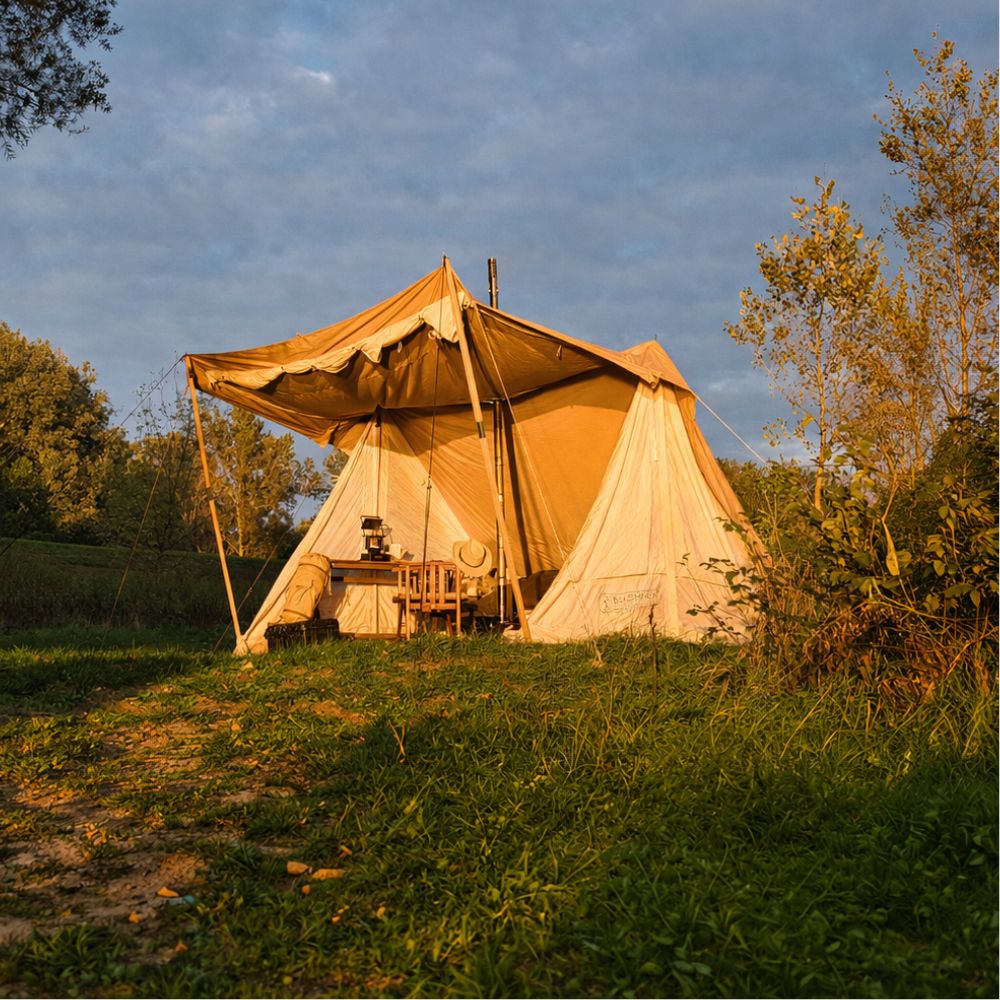
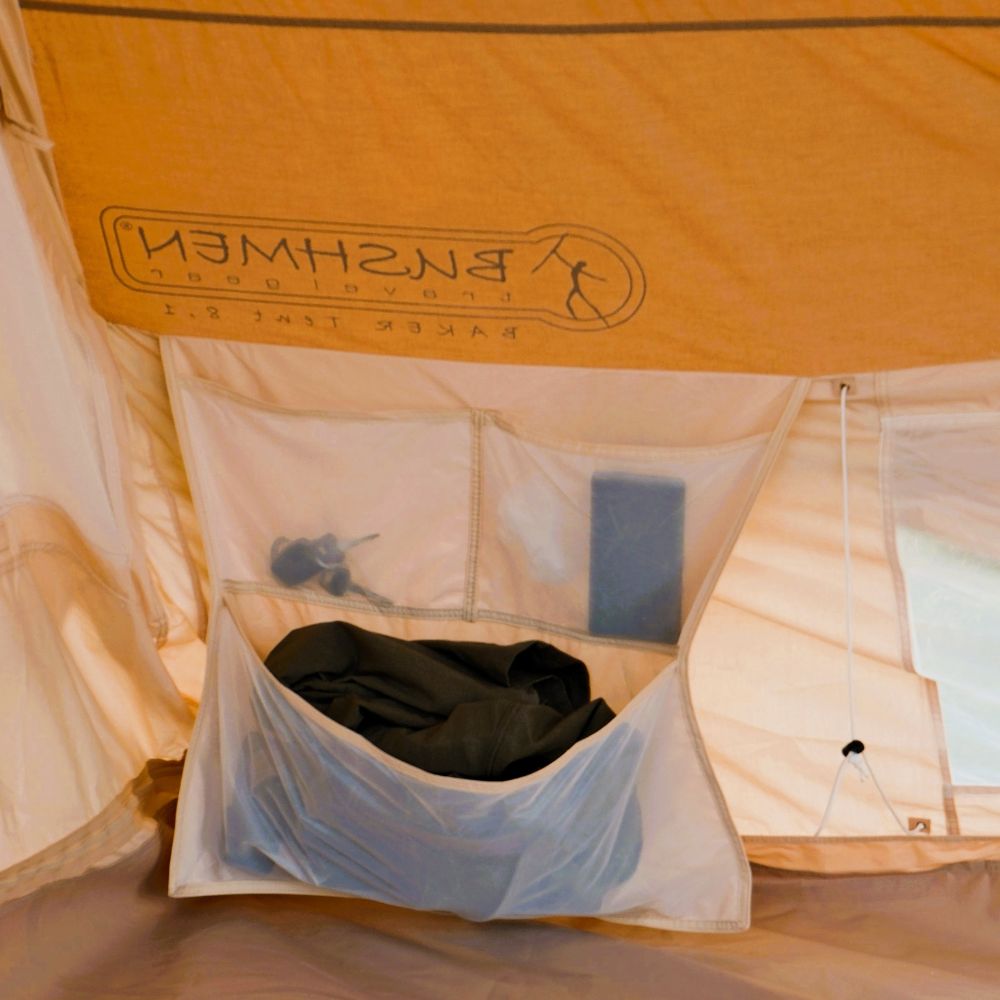
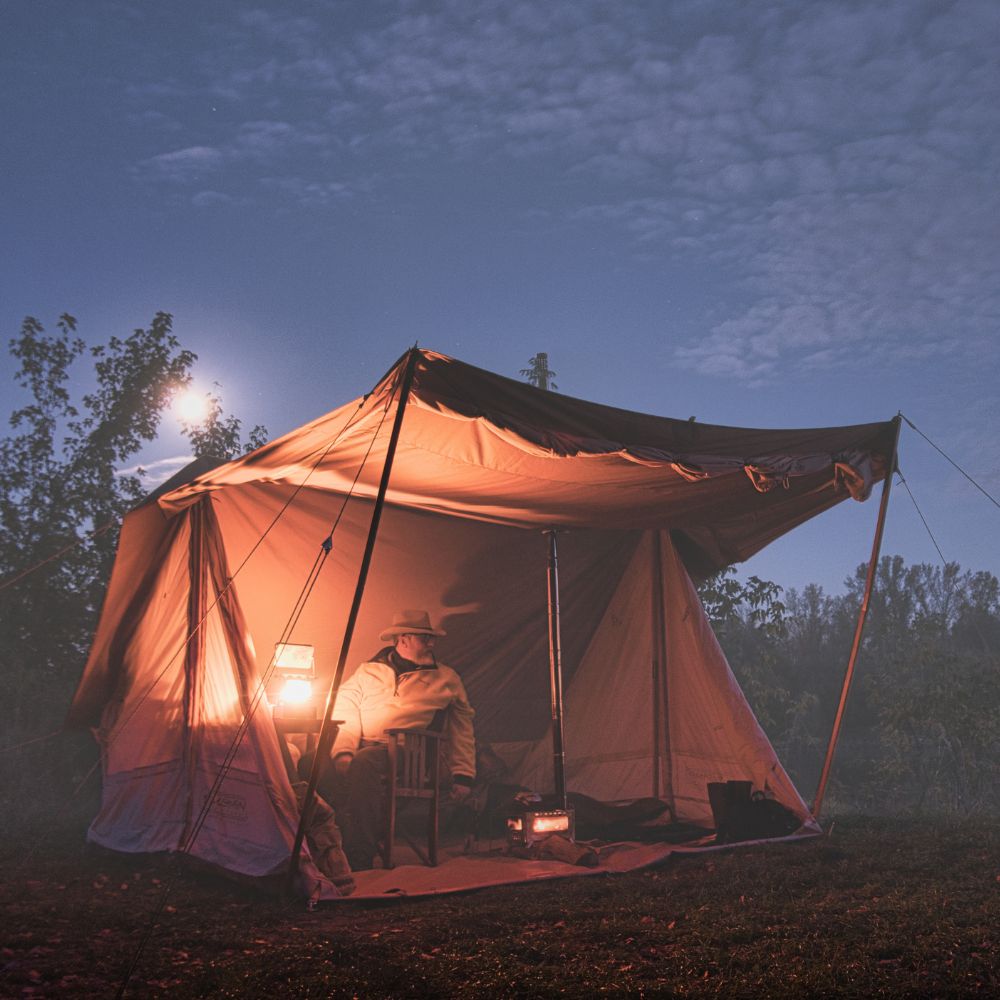
The Baker Tent 8.1 is designed primarily for stationary camping. With 8.1 m² of interior space and 2 metres of standing height, it allows normal movement, use of furniture, and drying of gear inside the tent. It is a strong option for longer scout camps, glamping, and bushcraft use.
The tent can sleep up to seven people, but in practice the most comfortable and functional setup is around three. This gap between maximum capacity and real-world comfort is worth considering carefully before purchasing.
Understanding the Space
The size becomes clearer when you think of it as a room rather than a set of dimensions. Three metres of length gives space for sleeping and gear end to end. The 2.7-metre width allows movement from side to side without constant manoeuvring. Two metres of height means most people can stand upright, get dressed, and move around without stooping.
Add gear and a stove and the space starts to feel more like a small room than a traditional tent. That said, the floor fills up faster than you might expect — which is why it feels generous for a few people but tight for a larger group.
Structure and Usability
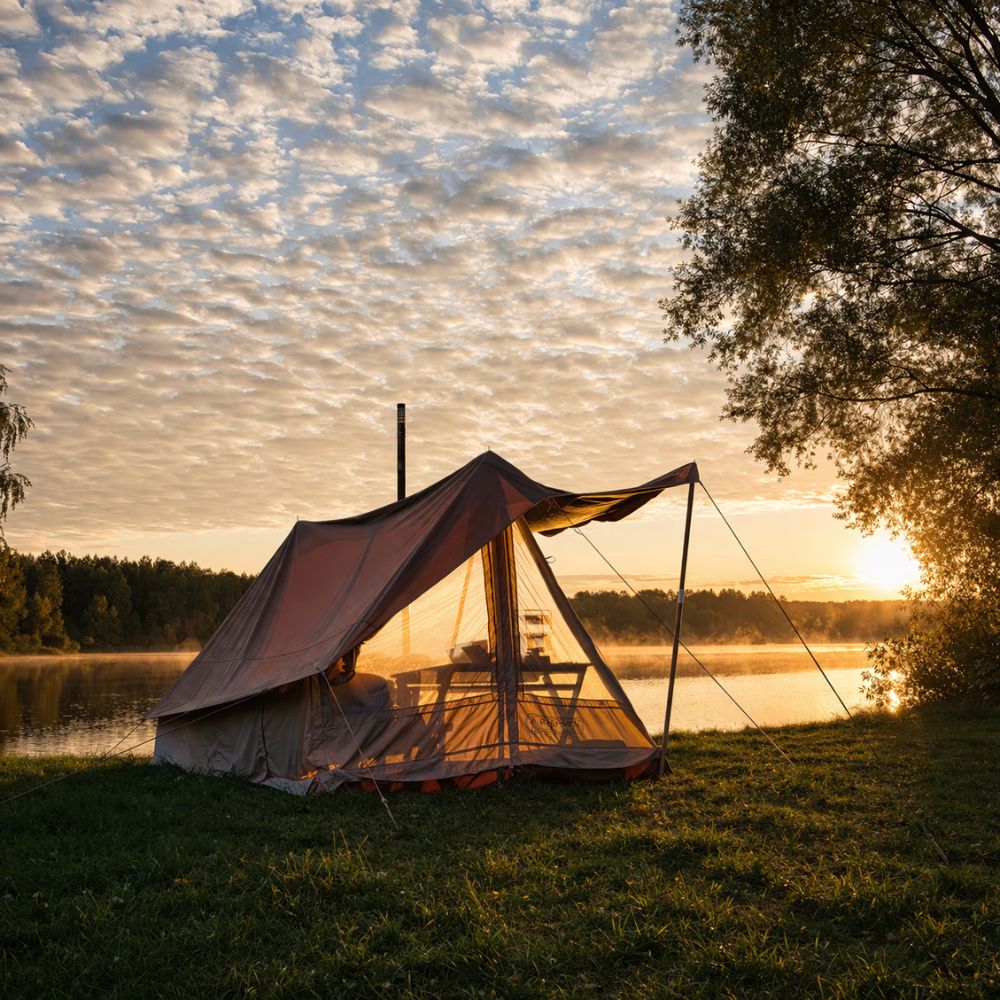
Both ends of the tent open up, and the 75 cm side walls combined with a roll-up side panel create a covered porch area. This is not simply extra space — in practice it becomes a core part of daily use for cooking, sitting, and handling gear.
Key structural features: two porch-end entrances, 75 cm side walls, roll-up side panel forming a covered porch, rubberised floor, aluminium poles (Ø 25 mm).
Materials
The main fabric is a technical cotton-polyester canvas (polycotton): 65% polyester and 35% cotton, at 220 g/m². The blend combines the durability of polyester with the breathability of cotton.
A breathability rating of RET 6.5 means the fabric allows moisture to pass outward rather than condensing on the inner surface. This reduces condensation compared to fully synthetic tents and helps maintain a more stable and comfortable interior — particularly relevant with multiple occupants or in changing temperatures.
It is worth noting the trade-offs: the material is heavier than lightweight synthetic alternatives and takes longer to dry after heavy rain.
Stove Compatibility
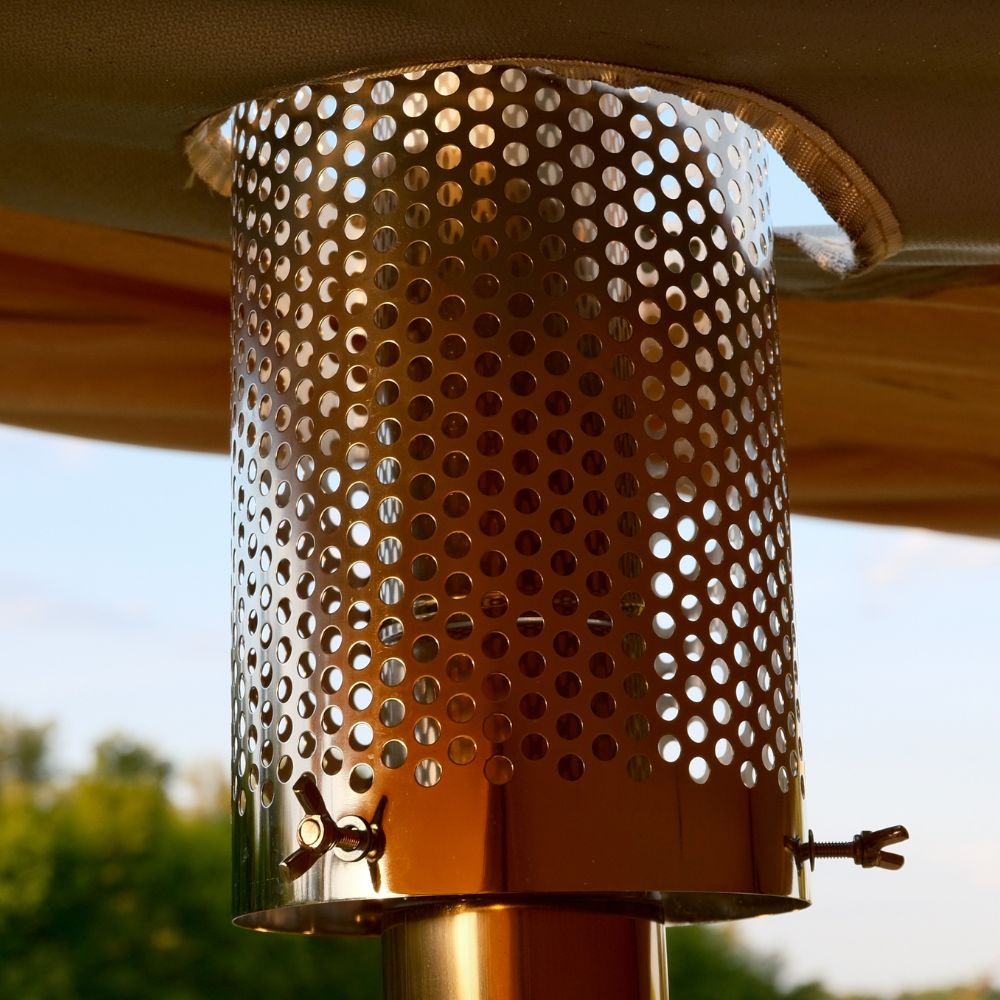
The tent includes a dedicated stove area with a heat-protected floor section. This supports heat management, gear drying, and makes the layout clearer by containing the heat source in one place.
The stove area does not make the tent fire-safe on its own. Using a stove always requires care, correct installation, and continuous supervision. Fire is always the responsibility of the person using it.
Windows and Ventilation
Mesh windows with closable flaps allow precise control of airflow. The windows open from the inside — a meaningful detail when using a stove, as adequate ventilation becomes a safety consideration.
Technical Specifications
- Dimensions: 3 m × 2.7 m × 2 m
- Floor area: 8.1 m²
- Tent weight: 15 kg
- Packed weight: 20 kg
- Packed size: 40 × 40 × 60 cm
- Water resistance: 500 mm H₂O
What’s in the Box
Tent, 4 poles, 8 pegs, 12 guyline tensioners, 12 guylines, carry bag.
Who It’s For — and Who It Isn’t
A good choice if you:
- Camp in one place for several days at a time
- Value space and living comfort over packability
- Use a stove or dry gear inside
- Enjoy camp life, not just overnight stops
- Have time to pitch, adjust, and maintain your shelter
Think carefully if you:
- Need a lightweight backpacking tent
- Move camp frequently
- Require a fully enclosed, high-waterproofing solution
Safety and Use
Read this section before first use — it is not a formality.
- Fire and heat: The fabric is not fireproof. Sparks and direct flame can ignite it. Use the stove only in the designated area. Children must be supervised closely when a stove is in use.
- Weather and structure: Strong wind can damage the tent. Set it up at an angle so water runs off, and peg it out firmly. A poorly tensioned structure can collapse. Heavy rain can pool on the fabric.
- UV exposure: Prolonged sunlight degrades the fabric over time. Storage out of direct sun extends the tent’s lifespan.
- Water resistance in practice: The 500 mm H₂O rating is adequate for standard conditions and rain. In prolonged heavy rain the fabric may wet through — additional waterproofing may be needed. The material can be retreated with an impregnation product suitable for polycotton. Note that colour may change or become uneven after treatment.
Care and Storage
- Dry the tent completely before packing
- Hand wash only with a mild liquid detergent
- No tumble drying
- Avoid strong detergents
- Store in a dry, cool place away from direct sunlight

Reviews
There are no reviews yet