




Description
Tarp Tent Ultralight Deschutes Solo Tarp by Six Moon Designs
Ultralight One-Person Tarp Shelter – Deschutes Solo Tarp Six Moon Designs
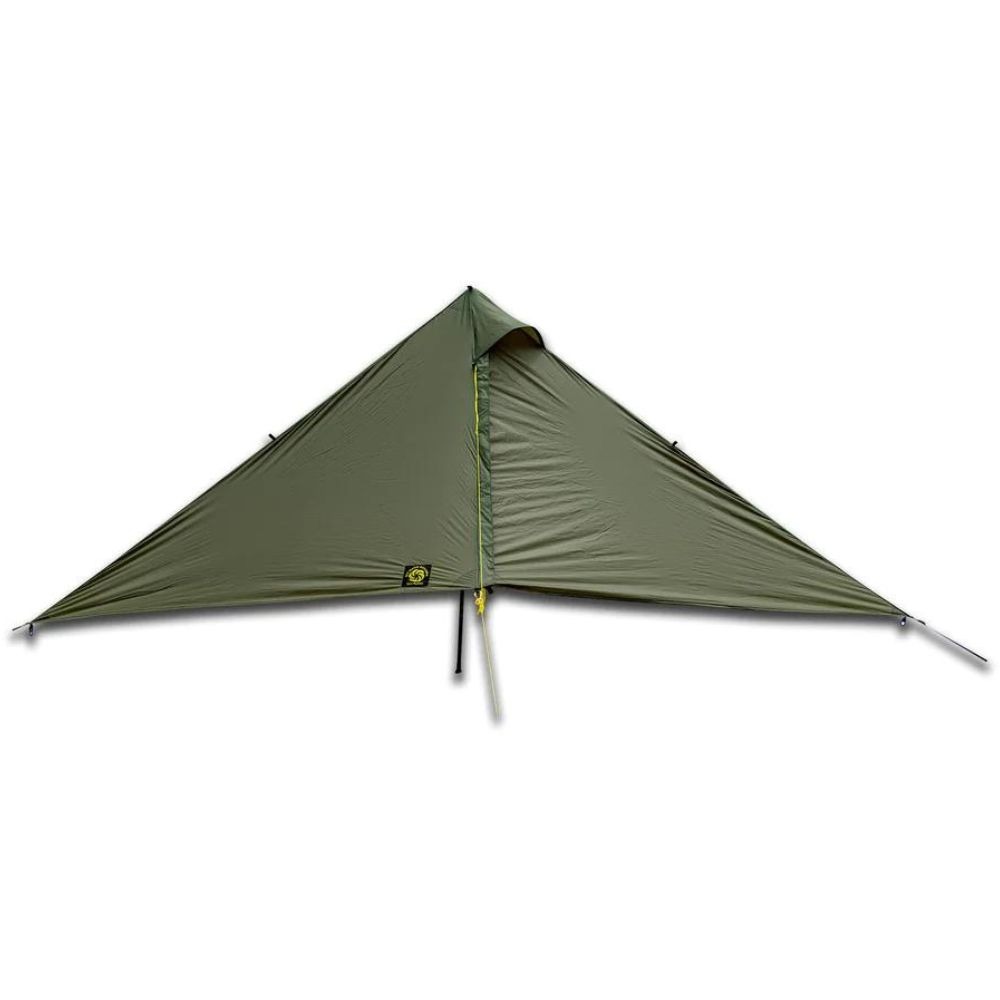
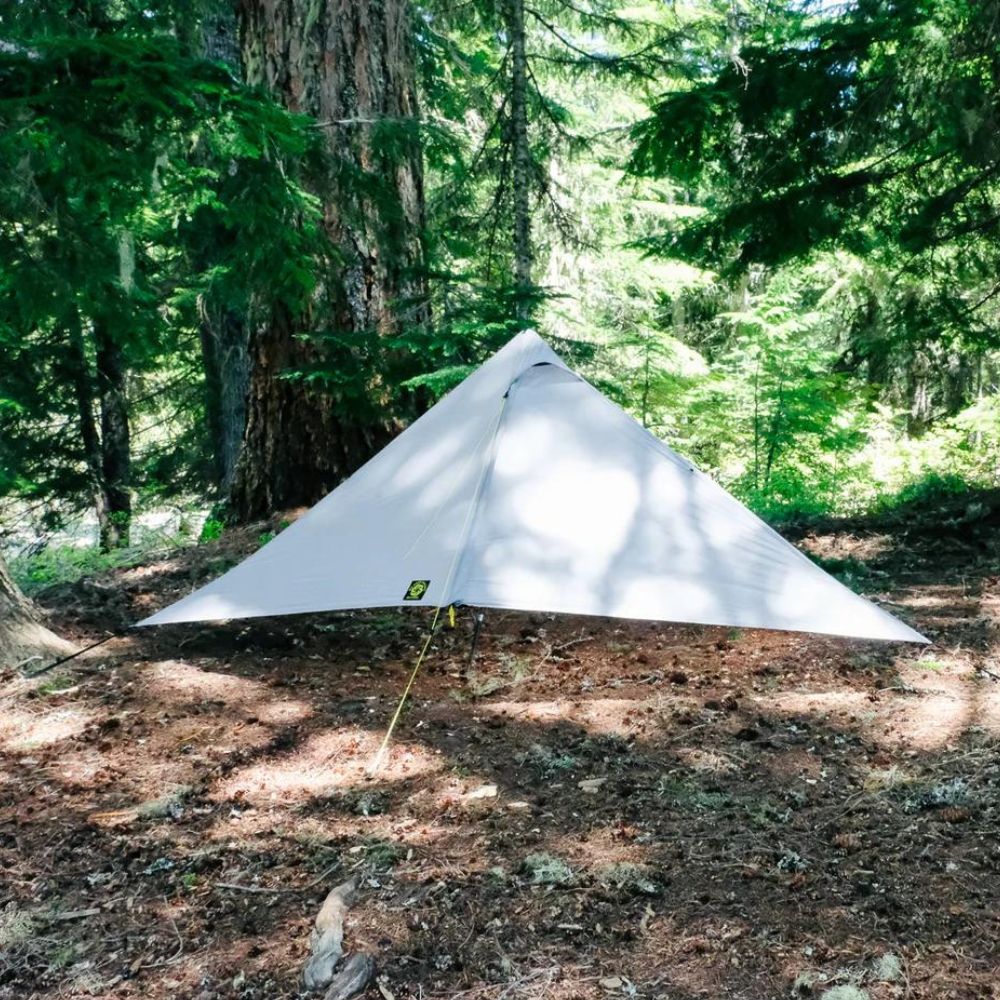
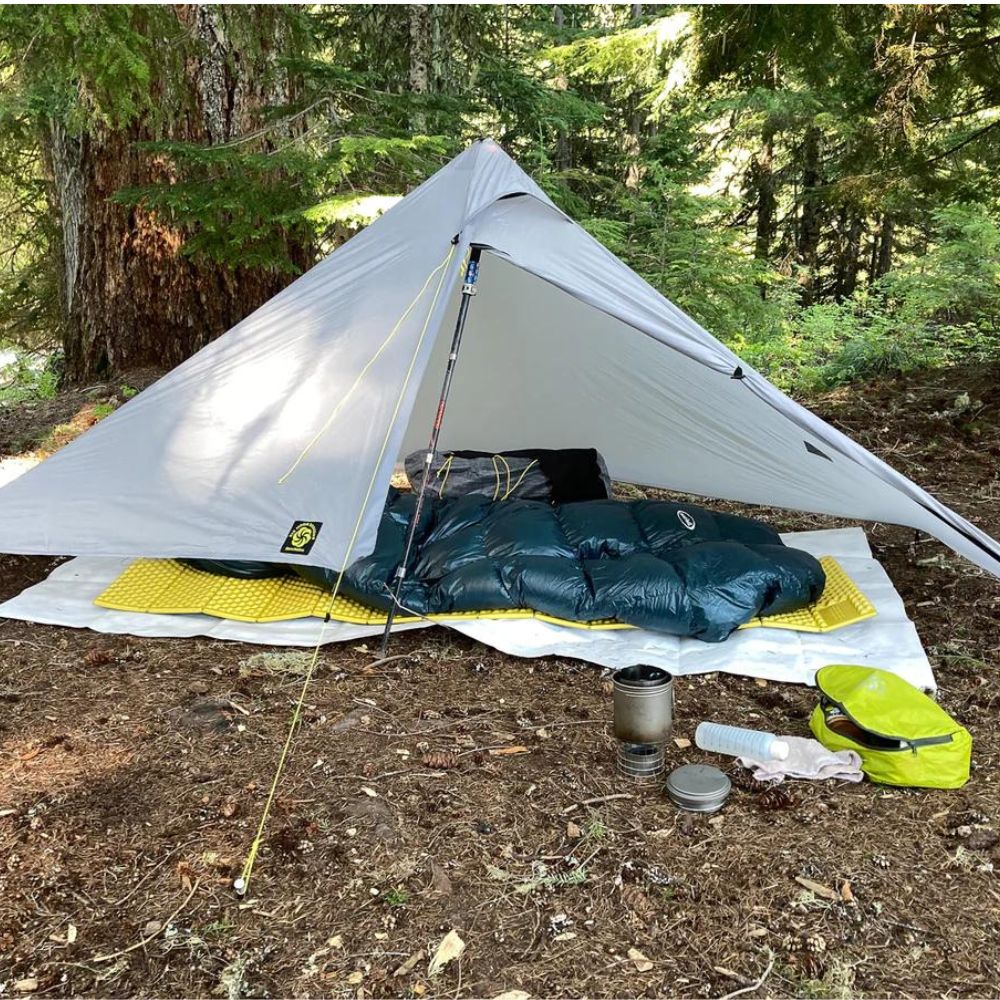
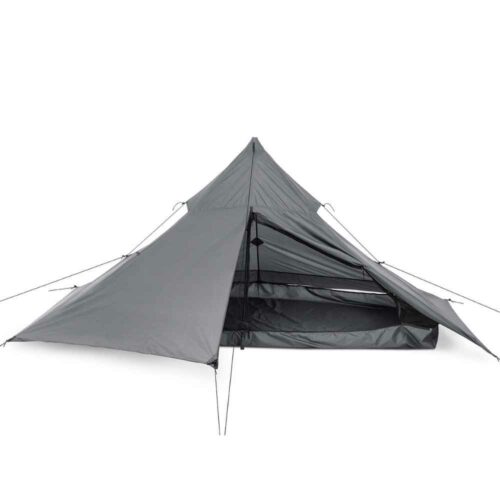
Six Moon Designs Deschutes Solo Tarp is a 368 g floorless one-person tarp shelter for lightweight backpacking, hiking and long-distance trails. It provides approximately 4 m² of coverage, full 360-degree side protection and enough space for one sleeper and their gear.
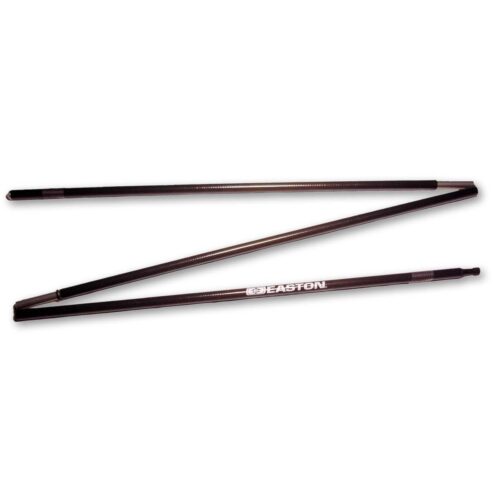
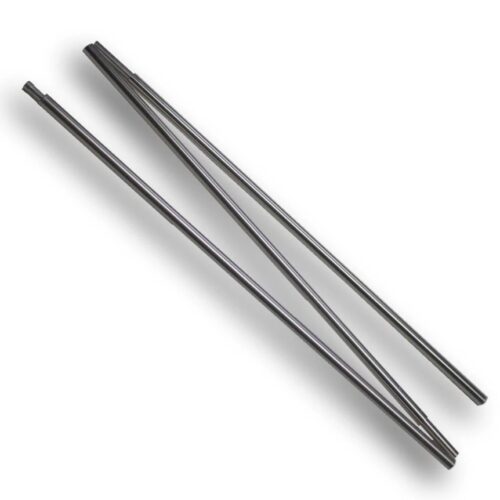
Deschutes is pitched with one adjustable trekking pole or a separately available 124 cm support pole. The single-pole construction removes the need to carry conventional tent poles and helps keep both the weight and packed size of the shelter low.
Please note: Deschutes Solo Tarp is a floorless shelter. It does not include insect mesh or an integrated floor. The seams are not factory sealed and must be treated with a seam sealer suitable for silicone-coated tent fabric before the shelter is used in rain. Seam sealer, stakes and the support pole are not included.
Lightweight and spacious one-person tarp shelter
Deschutes weighs approximately 368 g without stakes or a support pole. It packs down to approximately 30 × 11 cm, taking up very little space in a backpack.
The shelter provides approximately 4 m² of covered space. The floorless construction allows the sleeping mat and gear to be positioned relatively freely. Additional space along the long rear wall can be used for a backpack, footwear and other hiking equipment.
- weight approximately 368 g
- packed size approximately 30 × 11 cm
- covered area approximately 4 m²
- capacity for one person and gear
- floorless construction
Full side protection
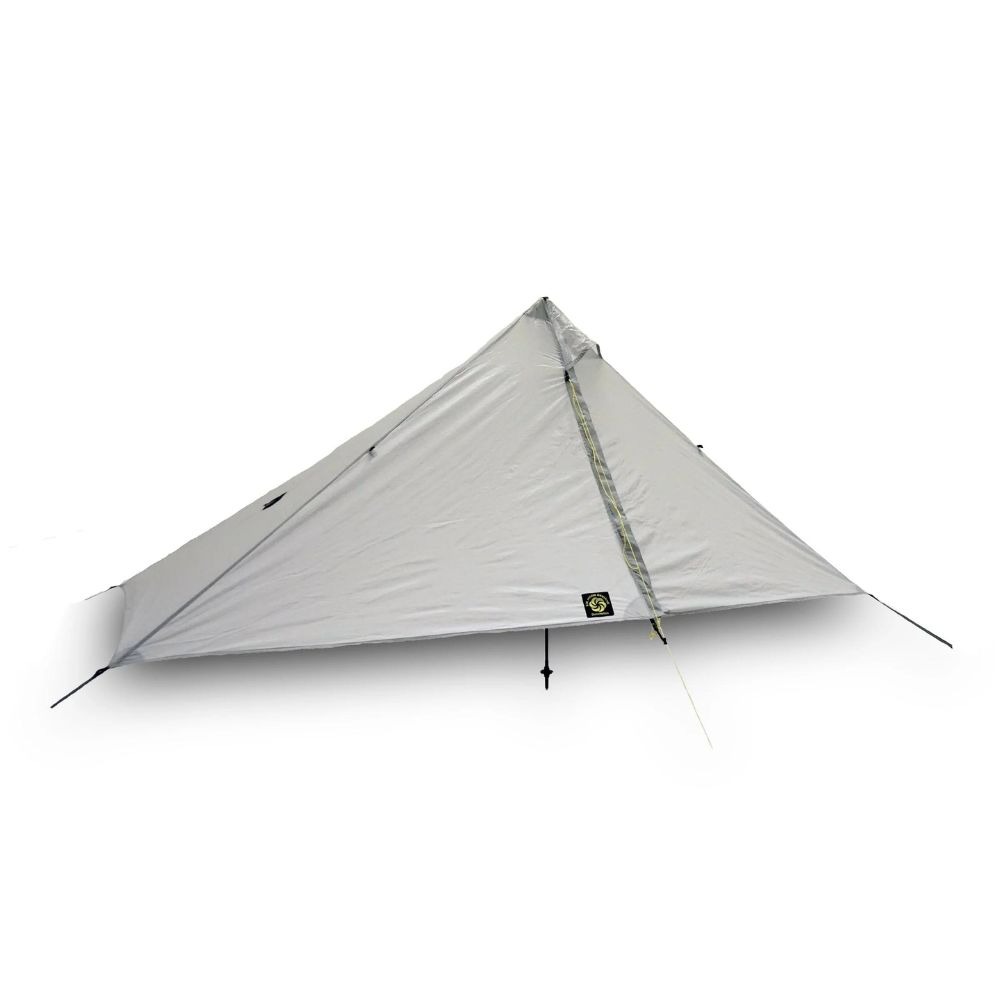
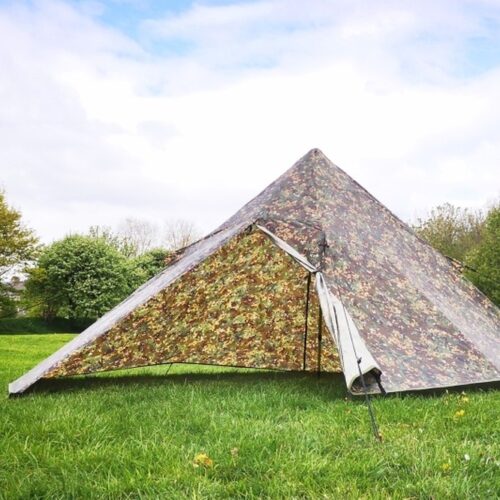
Deschutes is a shaped hexagonal tarp shelter with a perimeter that surrounds the entire sleeping area. Compared with a traditional open flat tarp, it provides better protection from side winds and driving rain.
Full 360-degree side protection does not make it the same as an enclosed tent. Deschutes does not have an integrated floor, so the campsite must be selected carefully. A separate Tyvek or Polycro groundsheet can be used when needed.
Surface water may enter a floorless shelter when it is pitched in a hollow, dry stream bed or another location where rainwater collects.
Adjustable pitching height
Deschutes can be pitched at different heights according to weather conditions and the user’s needs. The manufacturer’s typical pole adjustment range is approximately 114–124 cm.
- Approximately 124 cm: provides the greatest interior space and is the manufacturer’s recommended height when using the Serenity NetTent
- Approximately 114–124 cm: the normal adjustment range for balancing ventilation and weather protection
- Approximately 102 cm: allows the perimeter to be positioned close to the ground for a more protective pitch
A higher pitch leaves a larger ventilation gap between the perimeter and the ground. A lower pitch reduces airflow underneath the shelter and provides greater protection from wind and driving rain. Lowering the shelter also reduces the usable interior space.
Pitched with one trekking pole
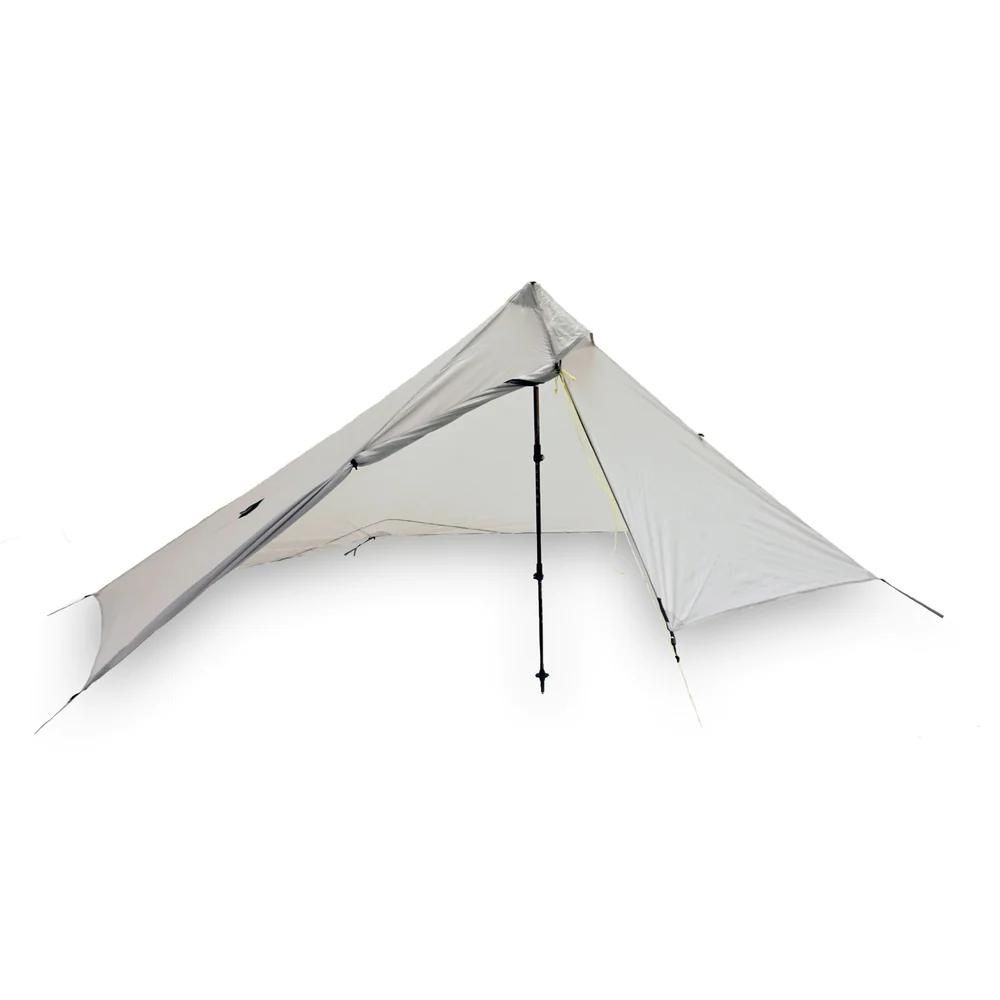
Deschutes is pitched with one adjustable trekking pole or a separately available support pole. At maximum height, the pole length is approximately 124 cm.
The pole can be angled slightly towards the entrance and vestibule. This moves the bottom of the pole away from the main sleeping area and increases the usable sleeping space.
The trekking pole or separate support pole is not included.
How to pitch the Deschutes Solo Tarp
Deschutes is not a freestanding shelter. It requires one support pole and six securely positioned stakes. Its shape and weather protection depend on stake placement, pole height and even guy-line tension.
- Choose a level campsite where rainwater will not collect.
- Remove sharp stones, sticks and pinecones from the ground.
- Spread the tarp on the ground and loosen the guy lines.
- Lightly stake the corners while following the shape of the shelter.
- Adjust the trekking pole to the required height, normally approximately 114–124 cm.
- Place the pole in the reinforced peak point.
- Angle the bottom of the pole slightly towards the vestibule when necessary.
- Insert the remaining stakes and close the entrance.
- Tighten the guy lines gradually from opposing sides.
- Make sure the canopy is even and the perimeter height suits the conditions.
- Check the tension again after approximately 30 minutes.
Tips for an evenly tensioned pitch
The walls of the hexagonal tarp shelter affect one another. Overtightening a single tie-out point may pull the entrance out of alignment, reduce the interior space or leave the opposite wall loose.
If the shelter remains wrinkled or asymmetrical, check:
- that the six tie-out points form a balanced shape
- that the guy lines follow the direction of the seams and roof panels
- that the pole is correctly positioned and adjusted to a suitable height
- that one corner has not been tightened more than the others
- that the entrance closes without excessive strain
Side entrance and vestibule
Deschutes has a long vertical YKK #3 zipper on the side. The large opening makes it easier to enter, leave and move equipment into the shelter.
The door panel can be rolled aside and secured in the open position. An open entrance improves ventilation in warm and dry conditions. In rain or wind, the door can be closed completely.
Do not use an open-flame camping stove inside a closed tarp shelter. Cooking involves fire, heat and carbon monoxide risks even in a floorless shelter.
Ventilation and condensation management
Deschutes has a ventilation opening near the peak. Air can also circulate through the gap between the perimeter and the ground.
Ventilation can be adjusted through the pitching height:
- a higher perimeter increases airflow
- a lower perimeter reduces draughts and improves protection in poor weather
- opening the door improves ventilation in warm and dry conditions
Deschutes is a single-wall shelter. Condensation may form on the inside of the fabric in humid, cold or still conditions. Ventilation reduces condensation but cannot eliminate it completely.
Keep the sleeping bag away from a wet inner surface whenever possible and wipe away excessive condensation when necessary.
20D silicone-coated polyester
The current Deschutes Solo Tarp canopy is made from 20D silicone-coated polyester. The manufacturer states a hydrostatic head of 3,000 mm.
Silicone-coated polyester absorbs little moisture and stretches less when wet than many silicone-coated nylon fabrics. This helps the shelter retain its tension in rainy conditions.
- canopy: 20D silicone-coated polyester
- hydrostatic head: 3,000 mm
- zipper: YKK #3
Seam sealing before use
The seams of the Deschutes Solo Tarp are not factory sealed. They must be treated before the shelter is used in rain.
Use a seam sealer suitable for silicone-coated tent fabrics. Treat the seams, reinforced areas and tie-out points specified in the manufacturer’s instructions. Allow the seam sealer to dry completely before packing the tarp.
Conventional seam tape or adhesive intended for polyurethane-coated materials may not adhere correctly to silicone-coated fabric.
Using Deschutes with the Serenity NetTent
Deschutes Solo Tarp can be combined with the separately available Six Moon Designs Serenity NetTent. The inner mesh shelter adds insect protection and a bathtub-style floor.
Together, Deschutes and Serenity form a double-wall one-person shelter. The outer tarp provides rain protection, while the mesh inner protects against insects and ground moisture.
- Deschutes Solo Tarp: approximately 368 g
- Serenity NetTent: approximately 312 g
- combined weight: approximately 680 g without stakes or a support pole
The manufacturer recommends pitching Deschutes at approximately 124 cm when using the Serenity NetTent to provide the greatest possible interior space.
Serenity NetTent is not included with the Deschutes Solo Tarp.
Using Deschutes with a groundsheet
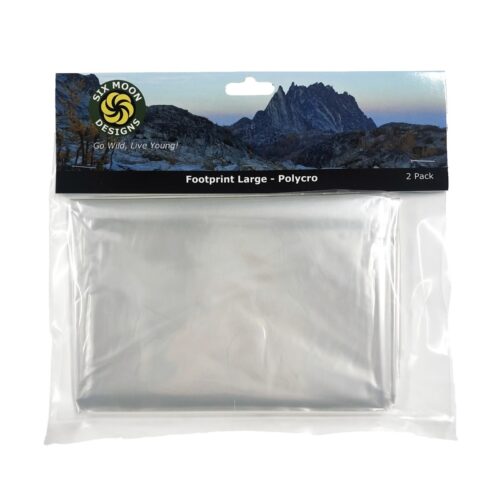
When the Serenity NetTent is not being used, Deschutes can be combined with a separate Six Moon Designs Tyvek or Polycro groundsheet.
A groundsheet helps keep the sleeping mat and sleeping bag away from wet and dirty ground while protecting equipment from abrasive surfaces. All edges of the groundsheet must remain completely inside the tarp to prevent rainwater from collecting on top of it.
A flat groundsheet does not provide the same protection as a bathtub floor. The campsite must still be selected so that surface water cannot flow through the shelter.
Is Deschutes suitable for taller users?
According to the manufacturer, the usable head and foot space for users taller than approximately 183 cm may depend on the thickness of the sleeping mat, pitching height and sleeping position.
A thick inflatable sleeping mat raises the sleeper closer to the sloping canopy and reduces the usable length. A very low pitch also provides less interior space than a shelter pitched at 124 cm.
A taller user will generally obtain the greatest usable sleeping space when:
- the pole is adjusted close to 124 cm
- the bottom of the pole is angled slightly towards the vestibule
- the tarp is pitched symmetrically and evenly tensioned
- the sleeping mat is positioned carefully along the longest usable line
Very tall users should consider both the shelter dimensions and the thickness of their sleeping mat, as well as the desired clearance from the inside of the canopy.
Windy and rainy conditions
The hexagonal single-pole construction distributes wind loading across several tie-out points. Good performance in poor weather still requires suitable orientation, stakes appropriate for the ground and even tension.
In windy conditions:
- position the lower or more enclosed side towards the prevailing wind
- reduce the pitching height when necessary
- keep the windward perimeter close to the ground
- use stakes suitable for the ground conditions
- check the guy-line tension when the weather changes
Deschutes is a three-season tarp shelter. It is not a dedicated winter or mountaineering tent and does not have a stated snow-load rating. Snow must not be allowed to accumulate on the canopy.
Who is the Deschutes Solo Tarp suitable for?
- lightweight backpackers and ultralight hikers
- one user and their gear
- hikers who already use a trekking pole
- users looking for a floorless shelter
- long-distance hiking and thru-hiking
- users who want to choose a separate groundsheet or mesh inner
- three-season backpacking
Who is the Deschutes Solo Tarp not suitable for?
- users who want an integrated tent floor
- users who need insect protection without a separate mesh inner
- use without a trekking pole or separate support pole
- users looking for a freestanding tent
- dedicated winter or mountaineering use
- users who do not want to seal the seams before use
Technical specifications
- Product: Six Moon Designs Deschutes Solo Tarp
- Product type: floorless one-person tarp shelter
- Seasons: 3
- Capacity: 1 person and gear
- Weight: approximately 368 g without stakes or a support pole
- Packed size: approximately 30 × 11 cm
- Covered area: approximately 4 m²
- Entrance: side entry
- Required stakes: 6, not included
- Required pole: 1 × up to approximately 124 cm, not included
- Typical pole height: approximately 114–124 cm
- Canopy: 20D silicone-coated polyester
- Hydrostatic head: 3,000 mm
- Zipper: YKK #3
- Floor: no
- Insect mesh: no
- Colours: green and grey
- Factory seam sealed: no
Package contents
- Six Moon Designs Deschutes Solo Tarp
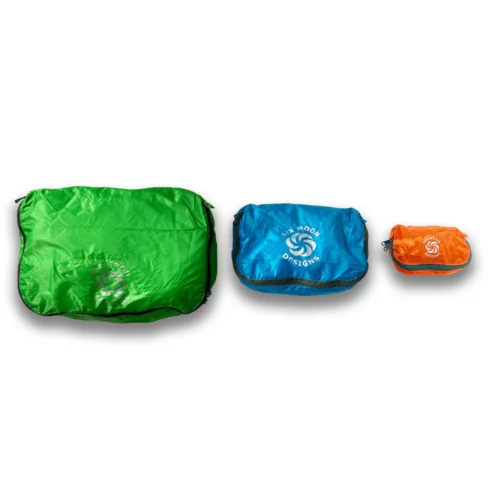
- stuff sack
- guy lines
Stakes, trekking pole, separate support pole, Serenity NetTent, groundsheet and seam sealer are not included.
Our thoughts
Deschutes Solo Tarp provides a large amount of protected space for a weight of only 368 g. Its fully enclosed perimeter offers better protection than a traditional open tarp, while the floorless construction retains the flexibility and low weight of a tarp shelter.
Deschutes is particularly suitable for users who understand careful campsite selection and want to adapt their shelter system to the conditions. During insect-free periods, it can be used with only a groundsheet. During insect season, the Serenity NetTent can be added.
In return for its low weight, Deschutes requires six reliable stake points, an adjustable trekking pole, seam sealing and some practice to achieve a balanced pitch.
Työn jälki siistiä, muuta en pysty vielä sanomaan. Hinta ja laatu tuntuvat olevan kohdillaan.